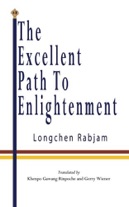
Autor: Longchenpa
Verlag: Jewelled Lotus Publications
Genre: Vajrayana, Dzogchen
Erscheinungsdatum: Juli 2014 Meine Wertung: 0
Zusammenfassung: Longchenpa (1308-1364) is the main Tibetan lineage holder of the Nyingma Dzogchen teachings and is the author of many texts including the well known "The Seven Treasures."
"The Excellent Path to Enlightenment" consists of one hundred and forty one separate practices that can be performed on a daily basis. It is a complete practice manual that contains the essential points of the entire Buddhist teachings.
The initial ninety two practices are associated with the Sutrayana teachings and the remaining practices are divided among the different yanas of the Vajrayana teachings. The book organizes these points in a special way in accordance with the view of Dzogchen, the pinnacle view of Buddhism.
The Vajrayana sections are days 93-141. To read and practice the full 141 days of ""The Excellent Path to Enlightenment"" it is required that you have permission, given by a qualified Vajrayana master, to engage in the Vajrayana Buddhist path. It would be best, and is recommended, to have a reading transmission (Lung) and practice instructions for this text.
If you do not meet the requirements then the Sutrayana portion of this text named, "The Excellent Path to Enlightenment - Sutrayana" can be ordered through Amazon and other book outlets.
Verlag: Jewelled Lotus Publications
Genre: Vajrayana, Dzogchen
Erscheinungsdatum: Juli 2014 Meine Wertung: 0
Zusammenfassung: Longchenpa (1308-1364) is the main Tibetan lineage holder of the Nyingma Dzogchen teachings and is the author of many texts including the well known "The Seven Treasures."
"The Excellent Path to Enlightenment" consists of one hundred and forty one separate practices that can be performed on a daily basis. It is a complete practice manual that contains the essential points of the entire Buddhist teachings.
The initial ninety two practices are associated with the Sutrayana teachings and the remaining practices are divided among the different yanas of the Vajrayana teachings. The book organizes these points in a special way in accordance with the view of Dzogchen, the pinnacle view of Buddhism.
The Vajrayana sections are days 93-141. To read and practice the full 141 days of ""The Excellent Path to Enlightenment"" it is required that you have permission, given by a qualified Vajrayana master, to engage in the Vajrayana Buddhist path. It would be best, and is recommended, to have a reading transmission (Lung) and practice instructions for this text.
If you do not meet the requirements then the Sutrayana portion of this text named, "The Excellent Path to Enlightenment - Sutrayana" can be ordered through Amazon and other book outlets.
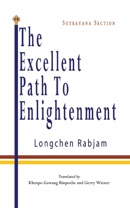
Autor: Longchenpa
Verlag: Jewelled Lotus Publications
Genre: Sutrayana, Dzogchen
Erscheinungsdatum: Okt. 2014 Meine Wertung: 0
Zusammenfassung: Longchenpa (1308-1364) is the main Tibetan lineage holder of the Nyingma Dzogchen teachings and is the author of many texts including the well known “The Seven Treasures.”
“The Excellent Path to Enlightenment” consists of one hundred and forty one separate practices that can be performed on a daily basis. It is a complete practice manual that contains the essential points of the entire Buddhist teachings.
The initial ninety two practices are associated with the Sutrayana teachings and the remaining practices are divided among the different yanas of the Vajrayana teachings. The book organizes these points in a special way in accordance with the view of Dzogchen, the pinnacle view of Buddhism.
This book is the initial ninety two practices associated with the Sutrayana teachings.
The Vajrayana sections are days 93-141. To read and practice the full 141 days of "“The Excellent Path to Enlightenment”" it is required that you have permission, given by a qualified Vajrayana master, to engage in the Vajrayana Buddhist path. It would be best, and is recommended, to have a reading transmission (Lung) and practice instructions for this text.
If you meet the requirements then this text can be ordered at https://www.createspace.com/4912303
Verlag: Jewelled Lotus Publications
Genre: Sutrayana, Dzogchen
Erscheinungsdatum: Okt. 2014 Meine Wertung: 0
Zusammenfassung: Longchenpa (1308-1364) is the main Tibetan lineage holder of the Nyingma Dzogchen teachings and is the author of many texts including the well known “The Seven Treasures.”
“The Excellent Path to Enlightenment” consists of one hundred and forty one separate practices that can be performed on a daily basis. It is a complete practice manual that contains the essential points of the entire Buddhist teachings.
The initial ninety two practices are associated with the Sutrayana teachings and the remaining practices are divided among the different yanas of the Vajrayana teachings. The book organizes these points in a special way in accordance with the view of Dzogchen, the pinnacle view of Buddhism.
This book is the initial ninety two practices associated with the Sutrayana teachings.
The Vajrayana sections are days 93-141. To read and practice the full 141 days of "“The Excellent Path to Enlightenment”" it is required that you have permission, given by a qualified Vajrayana master, to engage in the Vajrayana Buddhist path. It would be best, and is recommended, to have a reading transmission (Lung) and practice instructions for this text.
If you meet the requirements then this text can be ordered at https://www.createspace.com/4912303
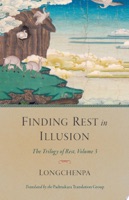
Autor: Longchenpa
Verlag: Shambhala Publications
Genre: Dzogchen, Mahayana
Erscheinungsdatum: Okt. 2020 Meine Wertung: 0
Zusammenfassung: A new translation of the Tibetan master Longchenpa’s famous work that systematically presents the path of yogic conduct according to the Dzogchen tradition
"Finding Rest in Illusion" is the third volume of the Trilogy of Rest, Longchenpa’s classic exposition of the Buddhist path. The purpose of these teachings is to introduce us to our most basic nature—the clear and pristine awareness that is the nature of the mind. According to the traditional Tibetan Buddhist formula of view, meditation, and action, this volume follows "Finding Rest in the Nature of the Mind", which establishes the view of the Buddhist path generally, and specifically that of the teachings of the Great Perfection, and "Finding Rest in Meditation", which outlines the main points of meditation, namely, where one should meditate, what qualities a practitioner should possess and develop, and what should be practiced.
The Padmakara Translation Group has provided us with a clear and fluid new translation of the final volume of the trilogy, "Finding Rest in Illusion", along with its autocommentary, "The Chariot of Excellence", both intended to elucidate the appropriate action of a Buddhist practitioner. "Finding Rest in Illusion "describes in detail the conduct of those who have stabilized their recognition of the nature of the mind and how to apply the Buddhist view when relating to ordinary appearances. Drawing extensively from classic Buddhist works, the author uses well-known examples of illusion found throughout Mahāyāna literature to illustrate the illusory nature of both saṃsāra and nirvāṇa, thus revealing their ultimate nondual nature. This is an invaluable manual for any genuine student of Buddhism who wishes to truly find rest through the path of the Great Perfection.
Verlag: Shambhala Publications
Genre: Dzogchen, Mahayana
Erscheinungsdatum: Okt. 2020 Meine Wertung: 0
Zusammenfassung: A new translation of the Tibetan master Longchenpa’s famous work that systematically presents the path of yogic conduct according to the Dzogchen tradition
"Finding Rest in Illusion" is the third volume of the Trilogy of Rest, Longchenpa’s classic exposition of the Buddhist path. The purpose of these teachings is to introduce us to our most basic nature—the clear and pristine awareness that is the nature of the mind. According to the traditional Tibetan Buddhist formula of view, meditation, and action, this volume follows "Finding Rest in the Nature of the Mind", which establishes the view of the Buddhist path generally, and specifically that of the teachings of the Great Perfection, and "Finding Rest in Meditation", which outlines the main points of meditation, namely, where one should meditate, what qualities a practitioner should possess and develop, and what should be practiced.
The Padmakara Translation Group has provided us with a clear and fluid new translation of the final volume of the trilogy, "Finding Rest in Illusion", along with its autocommentary, "The Chariot of Excellence", both intended to elucidate the appropriate action of a Buddhist practitioner. "Finding Rest in Illusion "describes in detail the conduct of those who have stabilized their recognition of the nature of the mind and how to apply the Buddhist view when relating to ordinary appearances. Drawing extensively from classic Buddhist works, the author uses well-known examples of illusion found throughout Mahāyāna literature to illustrate the illusory nature of both saṃsāra and nirvāṇa, thus revealing their ultimate nondual nature. This is an invaluable manual for any genuine student of Buddhism who wishes to truly find rest through the path of the Great Perfection.
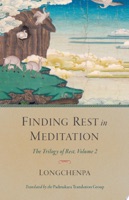
Autor: Longchenpa
Verlag: Shambhala Publications
Genre: Dzogchen, Mahayana, Vajrayana
Erscheinungsdatum: Okt. 2020 Meine Wertung: 0
Zusammenfassung: Released in paperback for the first time, this new translation of the Tibetan master Longchenpa's famous work systematically presents the path of meditation according to the Tibetan Dzogchen tradition.
Longchenpa's "Finding Rest in Meditation" is a classic Buddhist text outlining the main points of meditation, namely, where one should meditate, what qualities a practitioner should possess and develop, and what should be practiced. These instructions are a pithy distillation of the entirety of the Buddhist path designed to stabilize one's direct awareness of the nature of mind through meditative absorption.
The Padmakara Translation Group has provided us with a clear and fluid translation to "Finding Rest in Meditation", which will serve as a genuine aid to study and meditation. This text follows the first volume of Longchenpa's trilogy, "Finding Rest in the Nature of the Mind", which focuses on establishing the view and precedes the final volume, "Finding Rest in Illusion", which focuses on post-meditation yogic conduct.
Verlag: Shambhala Publications
Genre: Dzogchen, Mahayana, Vajrayana
Erscheinungsdatum: Okt. 2020 Meine Wertung: 0
Zusammenfassung: Released in paperback for the first time, this new translation of the Tibetan master Longchenpa's famous work systematically presents the path of meditation according to the Tibetan Dzogchen tradition.
Longchenpa's "Finding Rest in Meditation" is a classic Buddhist text outlining the main points of meditation, namely, where one should meditate, what qualities a practitioner should possess and develop, and what should be practiced. These instructions are a pithy distillation of the entirety of the Buddhist path designed to stabilize one's direct awareness of the nature of mind through meditative absorption.
The Padmakara Translation Group has provided us with a clear and fluid translation to "Finding Rest in Meditation", which will serve as a genuine aid to study and meditation. This text follows the first volume of Longchenpa's trilogy, "Finding Rest in the Nature of the Mind", which focuses on establishing the view and precedes the final volume, "Finding Rest in Illusion", which focuses on post-meditation yogic conduct.
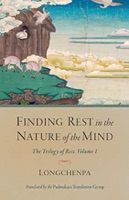
Autor: Longchenpa
Verlag: Shambhala
Genre: Dzogchen, Mahayana, Vajrayana
Meine Wertung: 0
Zusammenfassung: A new translation of Longchenpa's famous work that presents the entire scope of the Buddhist view combined with pith instructions pointing out the nature of one's mind. Longchen Rabjam's Finding Rest in the Nature of the Mind is a classic Buddhist manual for attaining true liberation through familiarizing ourselves with our most basic nature--our clear, pristine, and aware mind. Written in the fourteenth century, this text is the first part to Longchenpa's Trilogy of Rest, a work of the esoteric Tibetan Dzogchen tradition. This unique presentation of the Buddhist view and path combines the scholastic expository method of explanation with direct pith instructions designed for yogi practitioners. This text systematically presents the view in thirteen chapters, outlining all that a practitioner must know in order to embark on the complete Buddhist path. Here we find fundamental instructions on the need to turn away from materialism, how to find a qualified guide, how to develop boundless compassion for all beings, and much more. Longchenpa then carries the reader through to the view of tantra and its associated practices in chapter ten. Chapters eleven and twelve explore calm abiding (shamatha) and deep insight (vipashyana) meditation techniques. The work culminates with chapter thirteen, the final chapter, in which the result of practice is presented from the perspective of Dzogchen. The first part of the Trilogy of Rest is a comprehensive teaching on the view from the Tibetan Buddhist tradition, setting the foundation for the following two volumes: Finding Rest in Meditative Absorption, which focuses on meditation practice, and Finding Rest in Illusion, which focuses on post-meditation yogic conduct. The Padmakara Translation Group has provided us with a clear and fluid new translation to Finding Rest in the Nature of the Mind, which will serve as a genuine aid to study and meditation"--
Read more...
Verlag: Shambhala
Genre: Dzogchen, Mahayana, Vajrayana
Meine Wertung: 0
Zusammenfassung: A new translation of Longchenpa's famous work that presents the entire scope of the Buddhist view combined with pith instructions pointing out the nature of one's mind. Longchen Rabjam's Finding Rest in the Nature of the Mind is a classic Buddhist manual for attaining true liberation through familiarizing ourselves with our most basic nature--our clear, pristine, and aware mind. Written in the fourteenth century, this text is the first part to Longchenpa's Trilogy of Rest, a work of the esoteric Tibetan Dzogchen tradition. This unique presentation of the Buddhist view and path combines the scholastic expository method of explanation with direct pith instructions designed for yogi practitioners. This text systematically presents the view in thirteen chapters, outlining all that a practitioner must know in order to embark on the complete Buddhist path. Here we find fundamental instructions on the need to turn away from materialism, how to find a qualified guide, how to develop boundless compassion for all beings, and much more. Longchenpa then carries the reader through to the view of tantra and its associated practices in chapter ten. Chapters eleven and twelve explore calm abiding (shamatha) and deep insight (vipashyana) meditation techniques. The work culminates with chapter thirteen, the final chapter, in which the result of practice is presented from the perspective of Dzogchen. The first part of the Trilogy of Rest is a comprehensive teaching on the view from the Tibetan Buddhist tradition, setting the foundation for the following two volumes: Finding Rest in Meditative Absorption, which focuses on meditation practice, and Finding Rest in Illusion, which focuses on post-meditation yogic conduct. The Padmakara Translation Group has provided us with a clear and fluid new translation to Finding Rest in the Nature of the Mind, which will serve as a genuine aid to study and meditation"--
Read more...